

The Piazza Center — Procedures

Woman looking over her shoulder, showing her  profile  after breast revision

Breast

Breast Tissue Preservation Austin

Breast augmentation is entering a new era, focusing on preservation, comfort, and natural-looking results. Breast Tissue Preservation, also known as Motiva Preservé, is an advanced breast augmentatio

//It's a sub page! (adds sub to body class) //SEO Magic //Include for global functions and variables include $_SERVER['DOCUMENT_ROOT'] . '/assets/inc/functions.php'; inc( 'head' );

A Smarter Direction in Breast Augmentation

Breast augmentation is entering a new era, focusing on preservation, comfort, and natural-looking results. Breast Tissue Preservation, also known as Motiva Preservé, is an advanced breast augmentation technique now available at The Piazza Center in Austin, TX. This method is designed to enhance your shape while protecting your body’s natural anatomy.

Instead of relying on larger incisions, muscle disruption, and tissue cauterization, this approach emphasizes smaller, strategically hidden incisions, the preservation of nerves and ligaments, avoidance of cautery, and careful implant placement. The result is a breast augmentation procedure that leads to less pain, faster recovery, natural movement, and long-lasting results—without the many traditional trade-offs associated with older techniques.

For patients seeking a modern and refined approach to breast enhancement, Breast Tissue Preservation represents a significant advancement in surgical care.

What Is Breast Tissue Preservation with Motiva Preservé?

Breast Tissue Preservation with Motiva Preservé is a modern breast augmentation technique designed to enhance breast shape while respecting the body’s natural anatomy.

Rather than relying on traditional methods that involve extensive cutting, cauterization, and muscle elevation, this approach is built around preserving critical anatomical structures, including:

  • Nerves that contribute to sensation
  • Ligaments that support natural breast position
  • Blood vessels essential for healthy healing
  • Chest muscle function for unrestricted movement


These elements play a key role in comfort, recovery, and long-term satisfaction.

Dr. Piazza performs the procedure using a small, discreet incision hidden within the breast fold. Instead of cutting or burning tissue, space for the implant is created through controlled balloon expansion, allowing tissue to separate gently along natural planes.

To further limit irritation:

  • Bleeding is managed with a specialized solution rather than cautery
  • Tissue trauma is intentionally minimized to reduce inflammation and postoperative discomfort

Implant Placement

When anatomy allows, the implant is positioned:

  • Above the chest muscle
  • Within the posterior lamellar space

This placement supports:

  • Natural breast movement
  • Immediate arm mobility
  • Elimination of animation deformity during exercise or daily activity

Implant Technology


Motiva Preservé utilizes Motiva Ergonomic™ round implants, which feature:

  • Progressive gel technology
  • Adaptive shaping that responds to gravity

Although round in form, the gel settles into a soft, teardrop-like contour when upright, eliminating the rotational risks associated with anatomically shaped implants.

The Result

By emphasizing preservation over disruption, Breast Tissue Preservation with Motiva Preservé delivers:

  • Natural appearance and movement
  • Improved comfort during recovery
  • Structural stability designed to support long-term aesthetic results

This approach aligns with modern expectations for breast augmentation in that refinement, safety, and thoughtful surgical execution are just as important as the final look.

Banner media

Breast Tissue Preservation with Motiva Preservé Benefits

  • Reduced inflammation: Gentle, tissue-preserving techniques and avoidance of cautery help minimize irritation and support a smoother healing process.
  • Low-inflammatory implant technology: Motiva implants are engineered to integrate seamlessly with surrounding tissue, supporting a balanced inflammatory response.
  • Above-the-muscle placement: Placement in the posterior lamellar space enables immediate arm mobility, less tightness, and enhanced comfort—especially for active patients.
  • Smarter recovery: Most patients return to work within approximately three days, often without the need for prescription pain medication.
  • Natural movement and feel: Preserved tissue structures allow the implants to move harmoniously with your body.
  • Long-term stability and predictability: Protecting healthy tissue, nerves, and ligaments supports durable results and long-term satisfaction.

Before & After

View Gallery

Warning:

This gallery contains nudity. Please click OK to confirm you are at least 18 years of age and are not offended by this material.

Ok

Are You a Good Candidate for Breast Tissue Preservation?

Breast Tissue Preservation with Motiva Preservé is an excellent option for many women seeking natural-looking breast enhancement with a smoother recovery.

Ideal candidates:

  • Are first-time breast augmentation patients
  • Prefer proportionate enhancement rather than dramatic size increases
  • Value preservation of sensation and tissue integrity
  • Want a faster return to work and daily activities
  • Lead an active lifestyle and want implants that move naturally during exercise
  • Are in generally good health
  • Do not smoke
Woman with a tank top and hands through her hair showing a gorgeous boob job

Breast Augmentation Options and Related Procedures

Breast enhancement is not a one-size-fits-all procedure. Dr. Piazza offers a range of surgical approaches to address different anatomies, goals, and stages of life, including:

  • Breast Tissue Preservation with Motiva Preservé: A tissue-respecting approach focused on comfort, natural movement, and long-term breast health.
  • Traditional Breast Augmentation: Implant placement above or below the muscle using established surgical techniques when clinically appropriate.
  • Fat Transfer Breast Augmentation: Subtle volume enhancement using your own fat for patients seeking a modest, implant-free option.
  • Breast Lift with Augmentation (Mastopexy): Combines reshaping and volume enhancement for patients with breast ptosis or volume loss.
  • Breast Revision Surgery: Corrects or refines results from previous breast procedures, including implant exchange or repositioning.
Banner media
Doctor media

Advanced Training and Modern Judgment Create Expertise in Tissue-Preserving Breast Surgery

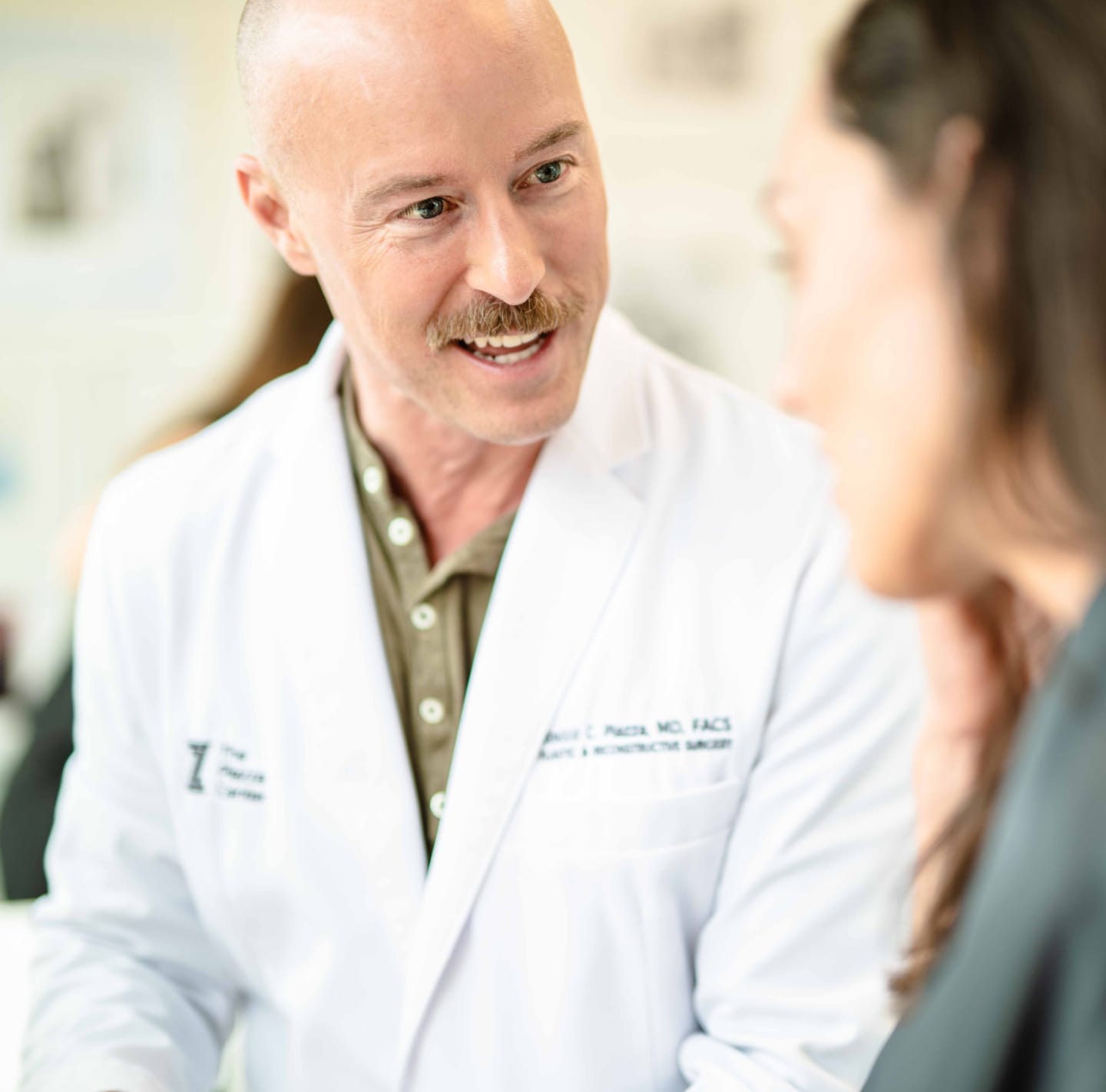
At The Piazza Center, Dr. Rocco Piazza performs Breast Tissue Preservation using Motiva Preservé. Dr. Piazza is a board-certified plastic surgeon with advanced training in modern, tissue-respecting breast surgery.

He is one of only 36 board-certified plastic surgeons in the United States who were invited to train directly with Motiva at their headquarters in Costa Rica. During this training, he learned the Preservé technique under the guidance of Dr. Manuel Chacón Quirós, the scientific director of the Breast Tissue Preservation Program.

This specialized training, combined with his board certification, national recognition in aesthetic and reconstructive breast surgery, and a commitment to continuous education, enables Dr. Piazza to provide patients with a higher level of precision, safety, and individualized care. Patients benefit from a philosophy that prioritizes preservation, long-term outcomes, and comfort.

Banner media

What to Expect Before, During, and After

Consultation

  • Your consultation includes a detailed anatomical assessment, discussion of implant options, and evaluation of whether the Motiva Preservé approach aligns with your goals
  • Costs vary based on implant selection, facility requirements, and anesthesia
  • Transparent pricing and financing guidance are provided during your visit

Procedure

  • Your procedure is performed in an accredited surgical facility with a dedicated, board-certified anesthesiologist
  • Dr. Piazza utilizes Motiva’s specialized Preservé instrumentation to achieve precise, tissue-preserving access for implant placement, thereby minimizing trauma while supporting balanced, natural results

Recovery and Results

  • Recovery is often smoother than traditional breast augmentation
  • Many patients maintain comfortable arm mobility and resume light daily activities within 24–48 hours
  • Return to work is within approximately three days
  • Discomfort can be managed without prescription pain medication
  • Swelling continues to improve over several weeks as the implants settle naturally into position
  • Follow-up appointments ensure healing is progressing optimally and results remain on track
Background media

For Patients Who Value How It’s Done, Not Just How It Looks

If you’re seeking breast enhancement that prioritizes natural anatomy, faster recovery, and long-term results, Breast Tissue Preservation with Motiva Preservé may be the right fit. Schedule a consultation with Dr. Rocco Piazza at The Piazza Center today to explore our patient-centered approach to modern breast augmentation.

FAQs

How long do breast implants typically last? Will I need a replacement?

How do I monitor silicone implants for “silent rupture”?

Can I still get mammograms with breast implants?

Will I still be able to breastfeed in the future?

What if I get pregnant or lose/gain weight after augmentation?

How visible is the scar, and where is it placed?

Can implants affect my ability to detect breast cancer?

What are the risks and side effects of breast augmentation (including rare risks)?

Am I “too young” for silicone implants?

How long do breast implants typically last? Will I need a replacement?

Breast implants are not considered 'lifetime devices.' While some patients keep them for years without issues, others may require revisions sooner due to complications such as rupture or capsular contracture. Regular follow-ups are essential to address any changes rather than waiting for an 'expiration date.' For more details on long-term considerations, refer to the FDA's overview of breast implant risks and complications.

How do I monitor silicone implants for “silent rupture”?

Silicone implant ruptures can be “silent,” meaning you may not experience symptoms immediately. Medical guidelines commonly reference imaging surveillance (MRI or ultrasound) beginning several years after surgery and then periodically thereafter. Dr. Piazza will advise you on a monitoring plan tailored to your implant type and history.

Can I still get mammograms with breast implants?

Yes. You can—and should—continue age-appropriate breast cancer screening. Implants may require additional “implant displacement” views so the technologist can better visualize breast tissue. It’s essential to inform the imaging center that you have implants when booking.

Will I still be able to breastfeed in the future?

Many women can breastfeed after augmentation, but there are no guarantees. Breastfeeding outcomes vary based on your anatomy, surgical approach, incision location, and the presence of glandular tissue. The FDA notes that changes in sensation and breastfeeding-related outcomes are considerations to discuss before surgery.

What if I get pregnant or lose/gain weight after augmentation?

Pregnancy and weight changes can alter breast volume and skin elasticity, sometimes leading to new sagging or shape changes, regardless of the technique used. If that happens, options may include a breast lift, implant adjustment, or revision. The key is planning your starting size and tissue tolerance with long-term life changes in mind.

How visible is the scar, and where is it placed?

Most augmentation scars are designed to be discreet, commonly placed in the inframammary fold (the natural crease under the breast). Scar quality depends on your healing biology, incision care, sun exposure, and factors like smoking history. The FDA lists scarring and other local tissue effects among potential outcomes and complications.

Can implants affect my ability to detect breast cancer?

Implants can make mammography more technically complex, which is why specialized imaging views are used. This is a screening logistics issue—not a reason to avoid implants. The most important steps are (1) telling your imaging center you have implants and (2) keeping routine screening appointments.

What are the risks and side effects of breast augmentation (including rare risks)?

All surgery carries risk. Potential complications include infection, bleeding/hematoma, seroma (fluid collection), wound healing issues, scarring, and anesthesia-related risks. Implant-specific risks can include capsular contracture, rupture, changes in nipple/breast sensation, rippling, malposition, and the need for future revision surgery. The FDA also highlights rare but serious conditions, including breast implant-associated anaplastic large cell lymphoma (BIA-ALCL) and other breast implant-associated malignancies and systemic symptom reports sometimes referred to as breast implant illness (BII).

Am I “too young” for silicone implants?

In the U.S., the FDA approval framework generally distinguishes age considerations by implant type/indication; for silicone gel-filled implants used for augmentation, the commonly referenced threshold is 22 years and older. Your candidacy still depends on health, anatomy, and informed consent.

Take the First Step

Schedule a Consultation

Meet Dr. Piazza, discuss your goals, and receive a personalized treatment plan.

Book Online(737) 787-7338

Financing Available

Cherry, CareCredit, and PatientFi options available. Get a quick decision without affecting your credit score.

Learn More →

See Real Results

Browse before & after photos from actual patients.

View Gallery →

Ready to Get Started?

Schedule Your Consultation with Dr. Piazza

Every patient deserves individualized care. Meet with Dr. Piazza to discuss your specific goals and develop a plan tailored to you.

Book Your Consultation